Methodology for Canadian-Focused Cuba Ratings Risk Model
The matrix aggregates political, economic, and sanctions indicators, weighting factors most relevant to Canadian investors, exporters, banks, insurers, researchers and policy makers.

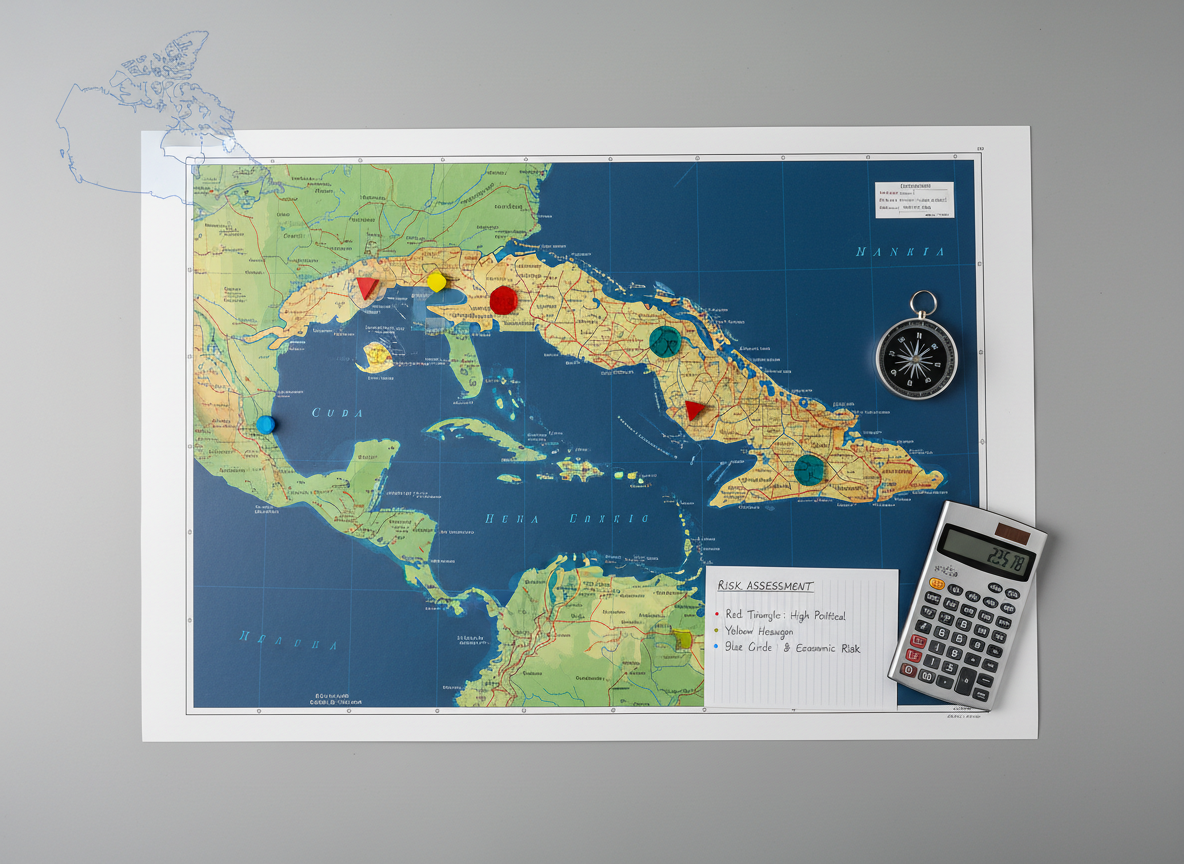
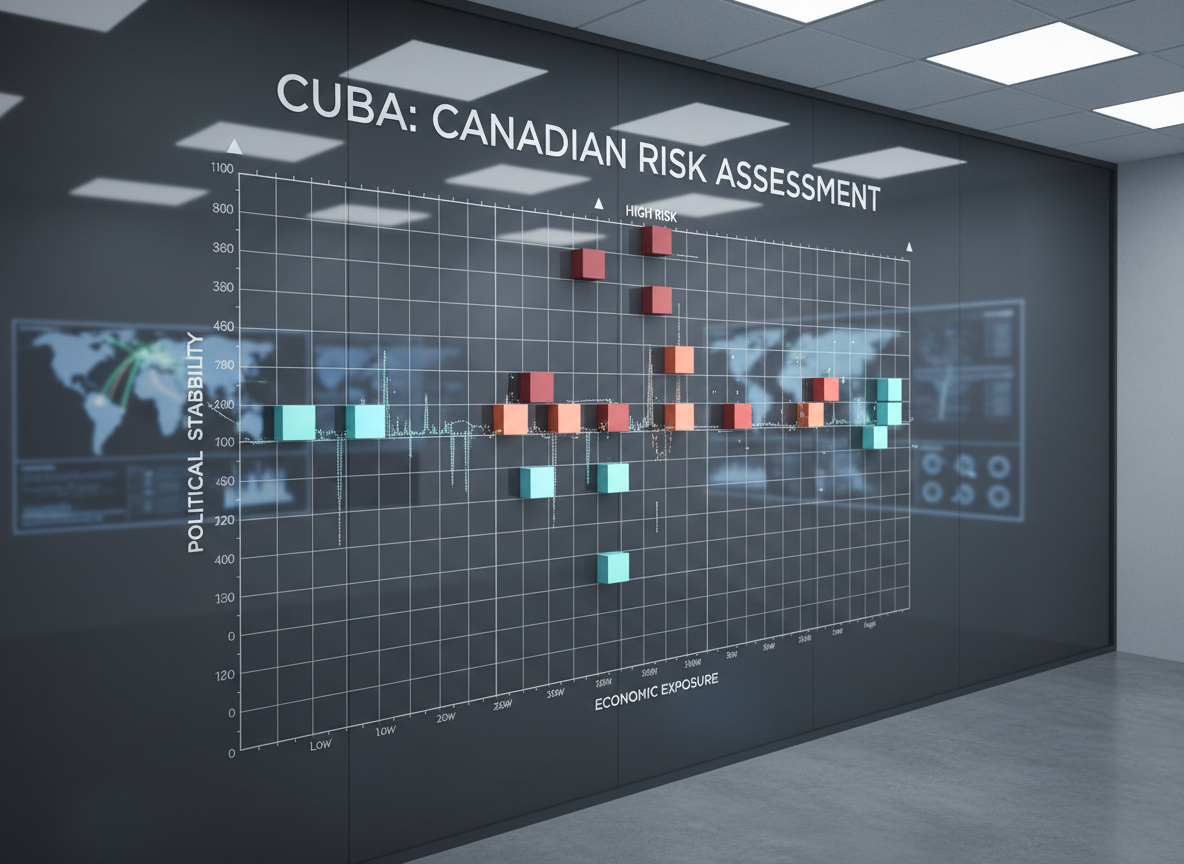
A risk matrix is a simple visual tool that helps classify risks by estimating how likely an event is to occur and how severe its consequences would be. A country risk index applies this logic at a national scale, combining political, economic, and operational indicators to measure how risky it is to invest or operate in a specific country.
Cuba is generally classified as a high‑risk environment due to:
- A centralized political system
- Limited access to international financing
- Structural economic constraints
- Exposure to natural hazards (hurricanes, droughts, coastal flooding)
In this case, I selected 7 categories, with several measurable parameters to try to evaluate the current situation of the country.
Risk Score will be equal to the probability of likelihood multiplied by the impact and the weight that I have decided to give to each parameter. Finally, I place each category in a heat map: low / medium / high risk.
Canada has a long-standing, stable diplomatic relationship with Cuba, unlike the U.S. This means Canadian stakeholders care less about regime change and more about:
- Regulatory predictability
- Tourism stability (Canada is Cuba’s #1 tourist source)
- Mining and energy investment security
- Exposure to U.S. sanctions
- Currency and payment risks
The weighting in each category reflects these priorities.
Political risk: Cuba faces a concentrated form of political risk rooted in its one‑party system (Cuba Communist Party), where decision‑making is centralized and policy shifts can occur without transparent consultation or institutional checks. This creates uncertainty for foreign actors because regulations, investment rules, and economic reforms may change abruptly or be unevenly implemented. The country also contends with periodic social unrest driven by economic shortages, limited civil liberties, and public dissatisfaction, which can disrupt operations and tourism. Additionally, Cuba’s exposure to external geopolitical pressures (especially U.S. sanctions) adds another layer of unpredictability that affects financial transactions, supply chains, and the broader business environment.
Macroeconomic risk: Cuba faces significant macroeconomic risks driven by chronic structural weaknesses and persistent external pressures. The country struggles with low productivity, limited access to international financing, and a heavy dependence on a few key sectors (especially tourism and nickel and cobalt) which makes the economy highly vulnerable to external shocks. Severe foreign exchange shortages and a distorted currency system undermine price stability, fuel inflation, and complicate business operations. U.S. sanctions to GAE S.A. (military conglomerate which controls a large part of the country’s tourism, finance, and international trade) further restrict trade, investment, and access to banking channels, intensifying liquidity constraints. Together, these factors create an environment where economic reforms are difficult to implement, growth remains fragile, and the overall macroeconomic outlook is marked by volatility and uncertainty.
Regulatory risk: Cuba faces substantial regulatory and legal risks stemming from a highly centralized state system in which the government retains broad discretionary power over foreign investment, property rights, and contract enforcement. The legal framework is often opaque, slow to adapt, and unevenly applied, creating uncertainty for businesses that depend on predictable rules. Foreign companies must typically operate through joint ventures with state entities (or the military conglomerate GAE S.A.), which limits managerial control and complicates dispute resolution. Additionally, the lack of an independent judiciary and the possibility of sudden regulatory changes (especially in sectors like tourism, energy, and mining) heighten the risk that investors may face unexpected compliance burdens, delays, or restrictions that directly affect operations and profitability.
Financial risk: Cuba faces pronounced financial risk driven by chronic hard‑currency shortages, limited access to international credit markets, and a heavy reliance on a few volatile revenue sources such as tourism, remittances, and nickel exports. The country’s restricted banking relationships (intensified by U.S. sanctions under Trump administration) complicate international payments, reduce liquidity, and make it difficult for foreign companies to repatriate profits or secure financing. Persistent fiscal deficits, a weak state‑dominated financial sector, and the absence of transparent monetary policy further undermine confidence. Together, these factors create an environment where financial obligations may be delayed, foreign investors face elevated payment and convertibility risks, and overall financial stability remains fragile.
Energy risk: Cuba faces significant energy risk due to its aging and inefficient power infrastructure, chronic fuel shortages, and heavy dependence on imported oil (particularly from politically aligned partners whose supply has become increasingly unreliable). Frequent breakdowns at thermal power plants and limited investment in modernization lead to recurring blackouts that disrupt daily life, industrial activity, and tourism. The country’s constrained access to international financing and technology further hampers its ability to expand renewable energy or upgrade its grid. Together, these factors create a fragile energy environment where supply instability and operational disruptions pose ongoing challenges for both domestic users and foreign investors.
Operational risk: Cuba faces notable operational risk due to persistent infrastructure deficiencies, logistical bottlenecks, and limited access to modern equipment and spare parts. Frequent power outages, unreliable transportation networks, and bureaucratic delays can disrupt production schedules, supply chains, and service delivery. Businesses often encounter shortages of basic inputs (from fuel to packaging materials) which complicate planning and increase costs. Additionally, the dominance of state-run enterprises and the need to navigate complex administrative procedures slow down decision-making and reduce operational flexibility. Together, these factors create an environment where day‑to‑day operations require constant adaptation and contingency planning.
Geopolitical risk: Cuba faces persistent geopolitical risk shaped by its long‑standing tensions with the United States, which impose sanctions (to companies linked to the military conglomerate GAE S.A) that restrict trade, financial flows, and access to global markets. The island’s close ties with countries such as Russia, Venezuela, and, increasingly, China expose it to the volatility of those partners’ political and economic conditions, as well as to shifting global power dynamics. Regional instability in Latin America and fluctuating diplomatic relations can further influence Cuba’s external environment, affecting tourism, investment, and supply chains. Altogether, these factors create a geopolitical landscape where external pressures and alliances significantly shape the country’s economic prospects and strategic vulnerabilities.
 Cuba Risk Matrix